




370.00€
An exceptionally scarce early Greek imprint by Neophytos Vamvas (1770–1855), one of the foremost scholars of the Greek Enlightenment, theologians, educators, and the principal translator of the Modern Greek Bible.
Published in Ermoupolis, Syros, in 1834, this work represents one of Vamvas’ earliest theological publications during his productive years on the island, where he collaborated closely with the American Protestant mission and the American Philhellenic Printing House.
Bibliographical Details
Author: Neophytos Vamvas (1770–1855)
Title:
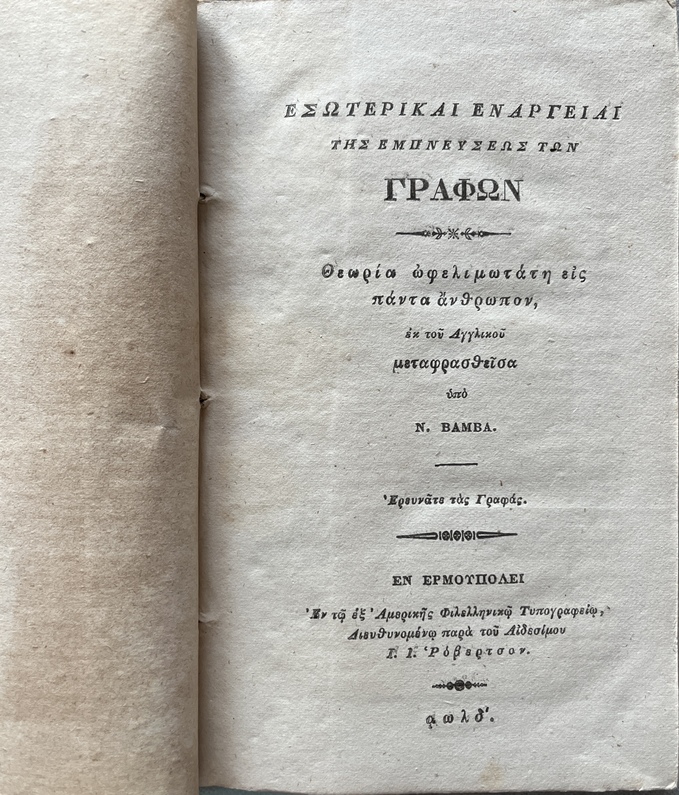
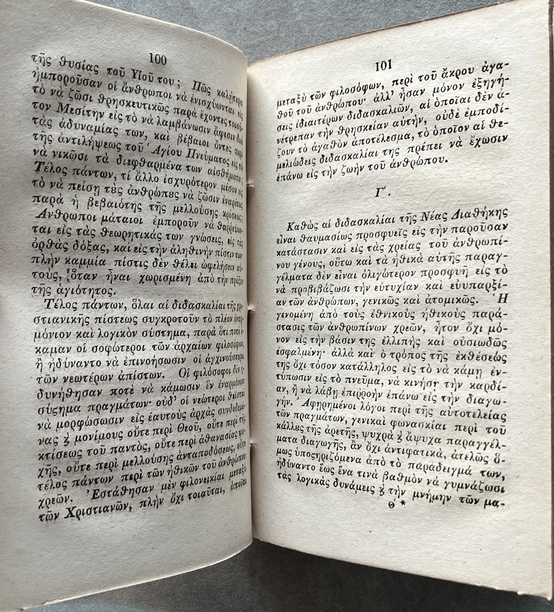
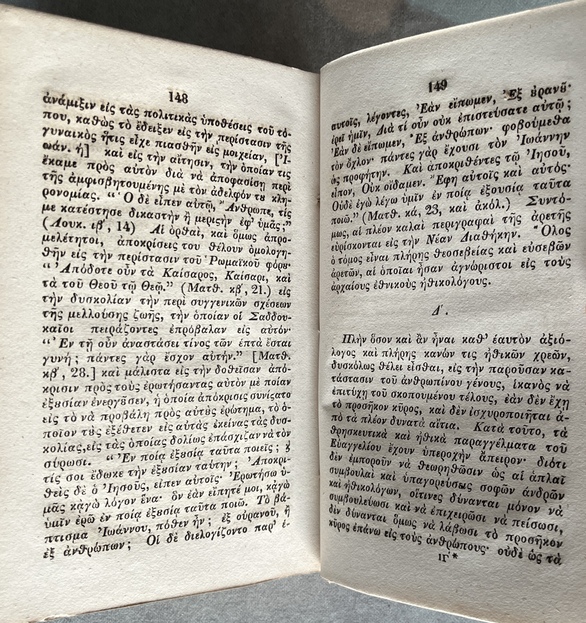
Εσωτερικαί ενάργειαι της εμπνεύσεως των Γραφών. Θεωρία ωφελιμωτάτη εις πάντα άνθρωπον, εκ του αγγλικού μεταφρασθείσα
(Esoterikai Enargeiai tis Empnefseos ton Graphon – Internal Evidences of the Inspiration of the Scriptures. A Theory of Great Benefit to All People, Translated from the English.)
Place of Publication: Ermoupolis, Syros
Publisher: American Philhellenic Printing House
Printer: Under the direction of the Reverend J. I. Robertson
Year: 1834
Language: Greek
Binding: Contemporary binding
Format: 17 cm × 11 cm
Pagination: 166 pages
Historical Importance
This volume is far more than a theological treatise—it is an important document in the intellectual and religious history of the newly established Greek state.
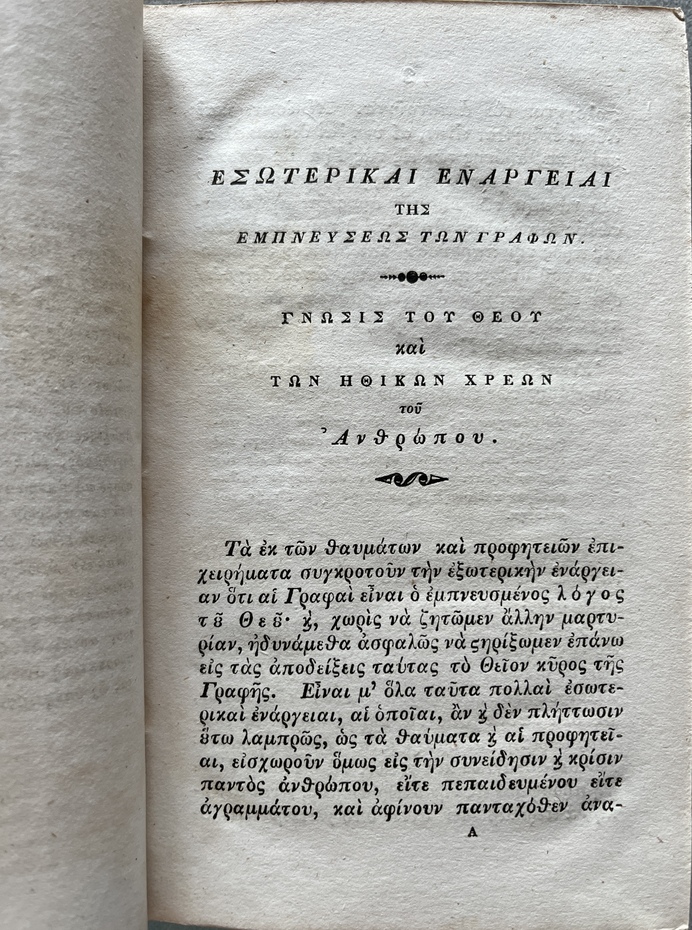
Translated into Greek by Neophytos Vamvas from an English original, the work presents the theological arguments supporting the divine inspiration of the Holy Scriptures and seeks to make these ideas accessible to a wider Greek readership through clear and understandable language.
Vamvas maintained that the Holy Scriptures should be available to every educated reader and believed that access to biblical texts was fundamental to both religious understanding and public education.
The publication belongs to the formative period during which Vamvas was undertaking his monumental translation of the Old and New Testaments directly from the Hebrew and Greek originals rather than relying solely upon the traditional Septuagint text.
His collaboration with the British and Foreign Bible Society and his advocacy for a translation in contemporary Greek made him one of the most influential—and controversial—religious scholars of nineteenth-century Greece. His work provoked intense opposition from conservative ecclesiastical circles, who viewed vernacular translations as a challenge to Orthodox tradition.
Vamvas also played an important role in the broader intellectual movement of the Greek Enlightenment and supported educational reform and the modernization of Greek scholarship. He was associated with the liberal theological ideas of Theoklitos Farmakidis and supported the movement that ultimately led to the recognition of the Autocephalous Church of Greece.
The American Philhellenic Press
The book was printed at the American Philhellenic Printing House in Ermoupolis, one of the earliest and most significant presses operating in the newly independent Kingdom of Greece.
Established with the support of American missionaries and Philhellenes, the press became an important centre for educational, theological, and linguistic publications during the formative decades of the modern Greek state.
Books bearing this imprint are increasingly sought after by collectors of Greek printing, missionary history, and nineteenth-century philhellenism.
Condition
Good overall condition for a book published in 1834.
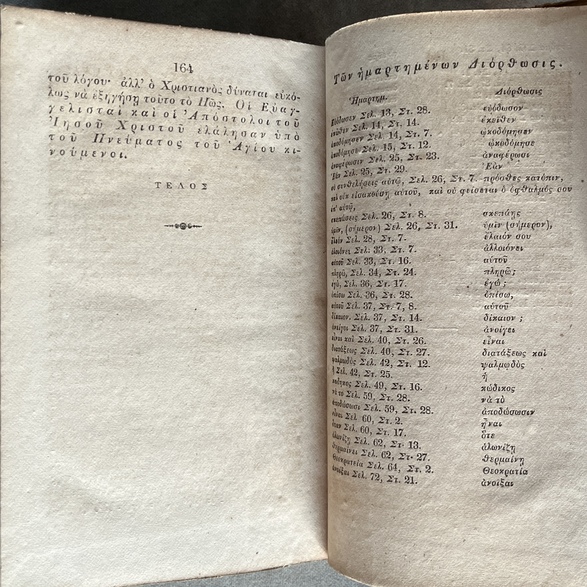
Complete: 166 pages.
Contemporary hard binding.
Binding remains sound.
Interior generally clean and legible.
Expected age-related wear, minor foxing, and signs of handling consistent with a nearly 190-year-old publication.
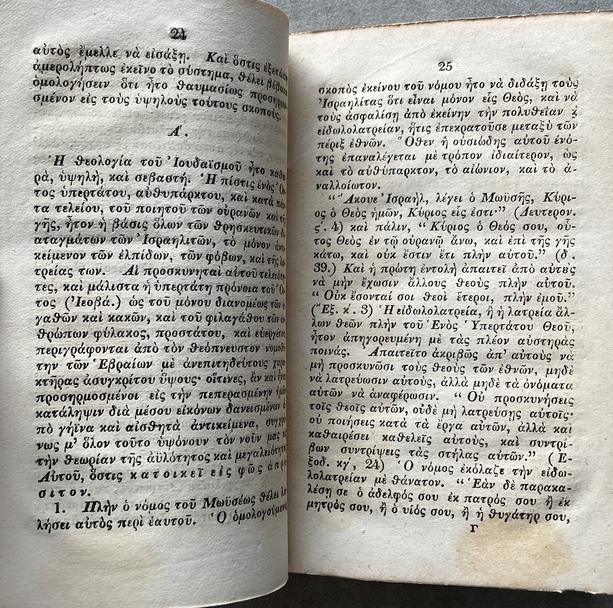
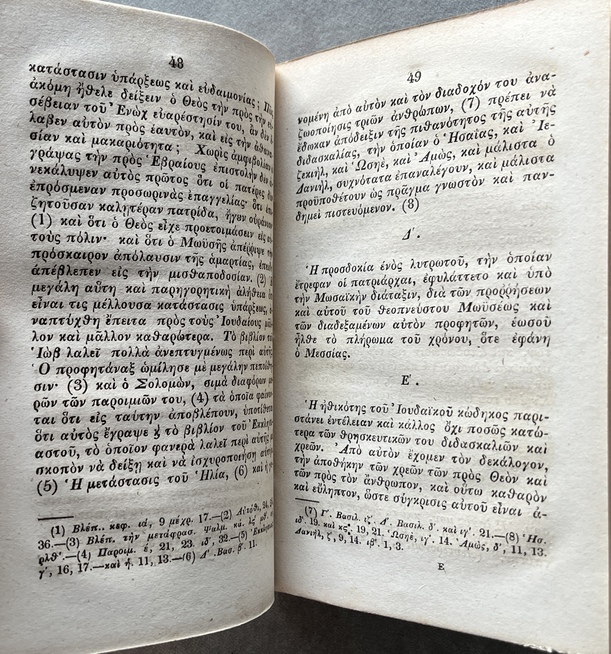
Please examine all photographs carefully, as they form an integral part of the description and condition report.
Collector’s Note
Early editions by Neophytos Vamvas are considerably scarcer than his later Bible editions and are increasingly appreciated by collectors of Greek Enlightenment literature, early Greek printing, theology, and nineteenth-century intellectual history.
An important and historically significant publication connecting the Greek Enlightenment, the emergence of the modern Greek language, early missionary printing, and the history of biblical translation in Greece.