
250.00€
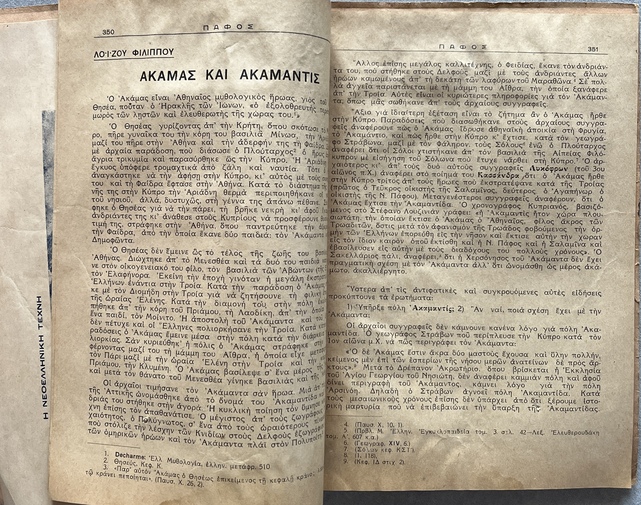
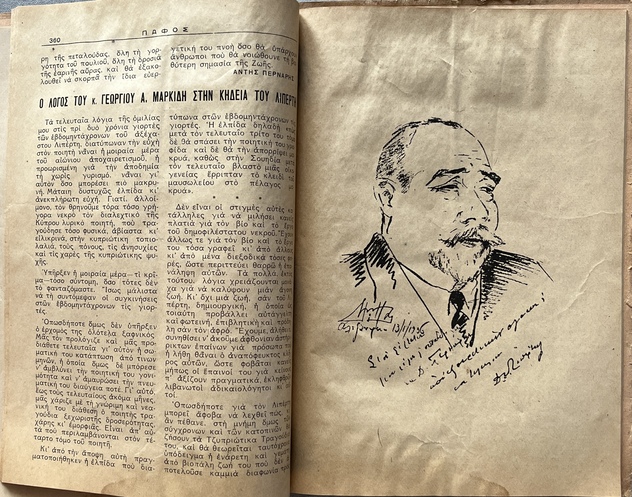
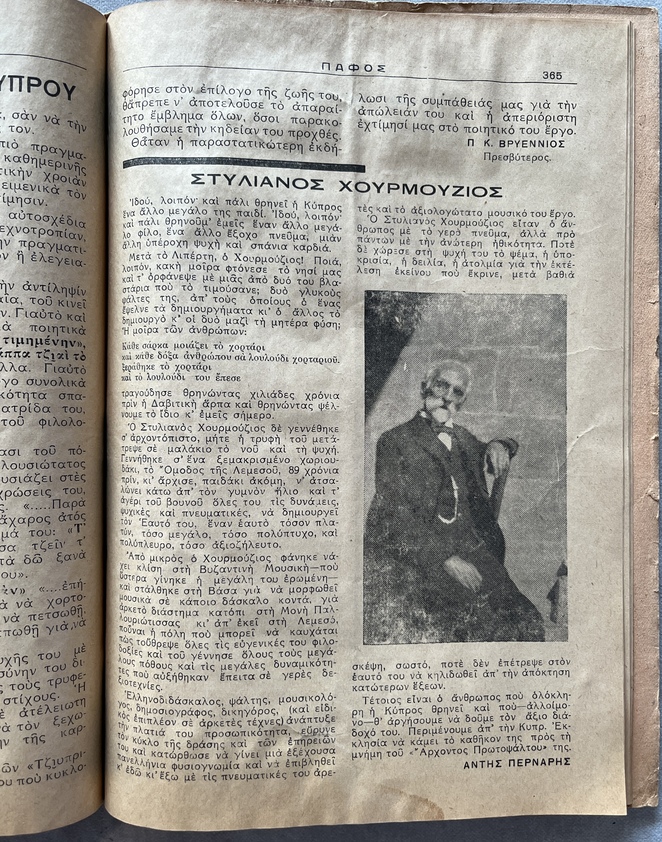
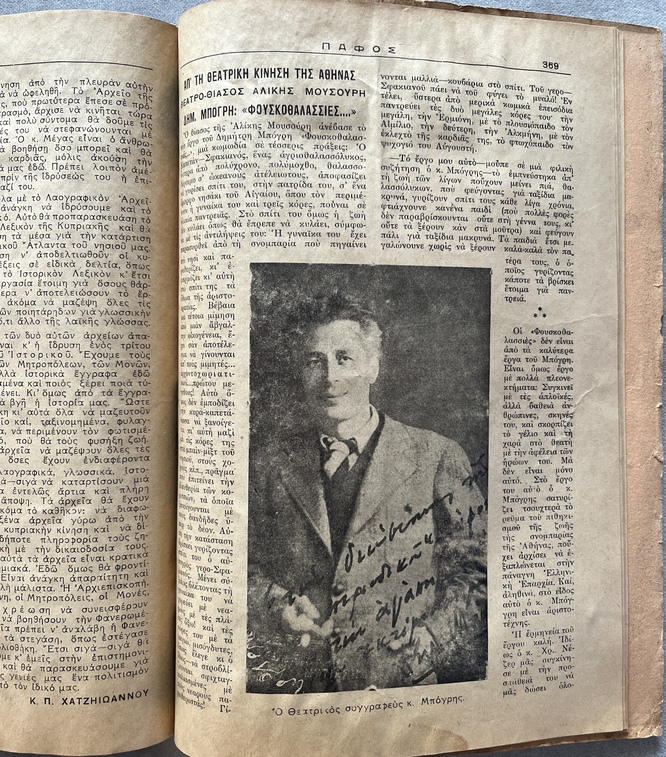
An exceptionally interesting early issue of Pafos (Pafos), one of the most important literary and intellectual periodicals published in Cyprus during the interwar period.
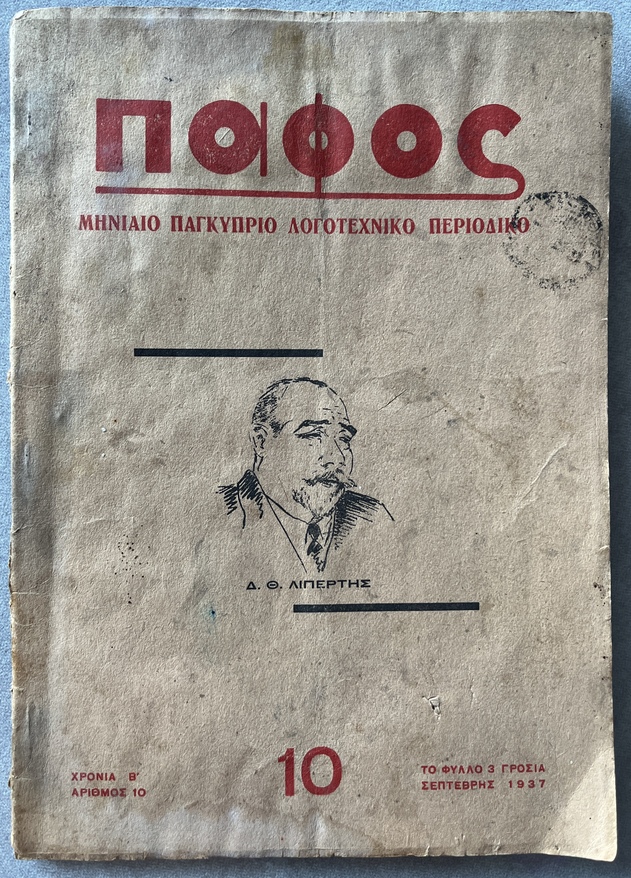
This is Issue No. 10, September 1937 published in Paphos, Cyprus, during the period of British administration, and belongs to the formative years of the magazine.
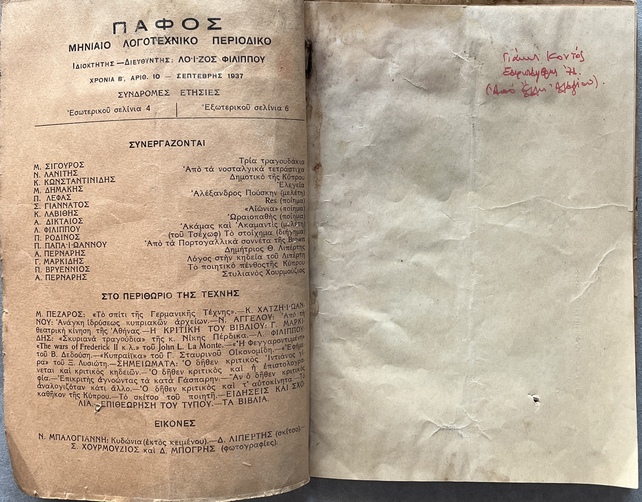
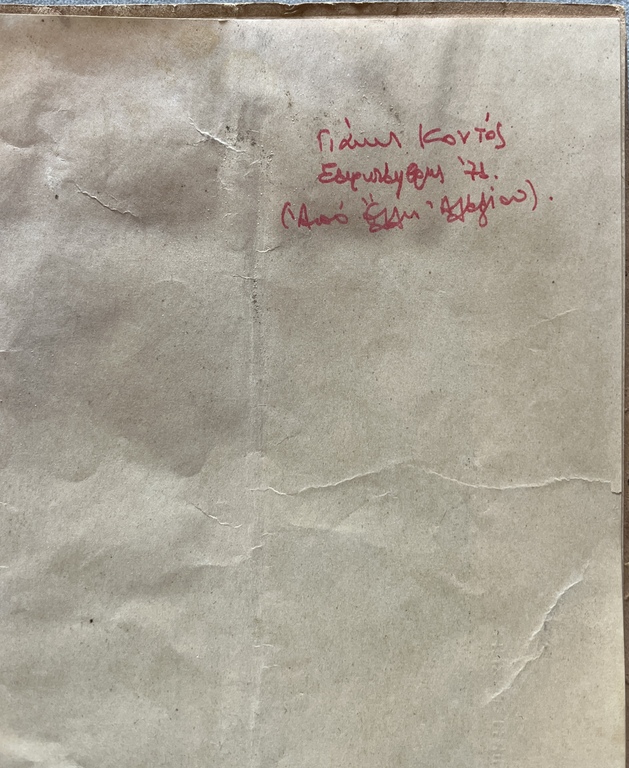
The issue is particularly attractive because of its striking modernist cover design, its early date, its connection with the intellectual history of Cyprus, and its later provenance from the library of the distinguished Greek poet Giannis Kontos (1943–2015).
Bibliographical Details
Title: Paphos – Monthly All-Cypriot Literary, Philological and Critical Magazine
Issue: No. 10
Date: September 1937
Place of publication: Paphos, Cyprus
Editor / Director: Loizos Philippou
Format: Octavo
Dimensions: approximately 24 cm× 17 cm
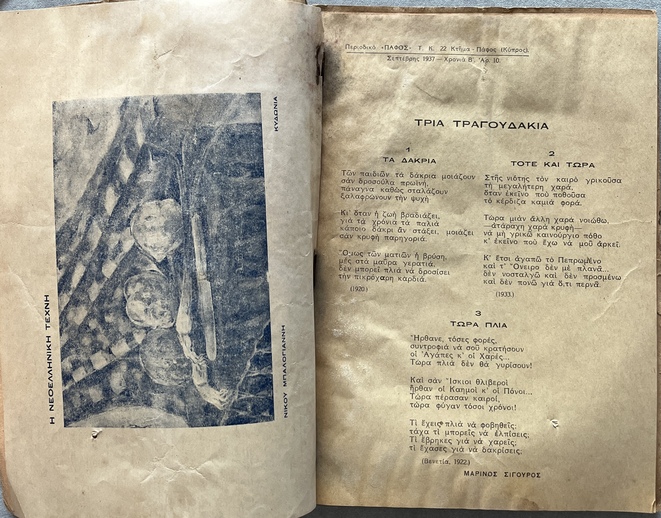
Pagination: pp. 343–379 (36 pages)
Language: Greek
The continuous pagination, pp. 343–379, indicates that the issue formed part of the larger annual volume rather than being independently paginated.
A Remarkable Modernist / Avant-Garde Cover
One of the most visually distinctive aspects of this copy is the original 1937 cover design.
The composition displays a striking geometric and modernist visual language, with strong graphic contrasts, stylized forms and a dynamic arrangement of elements.
To the modern eye, the design bears a noticeable resemblance to the visual vocabulary associated with the European avant-garde of the interwar period, particularly the geometric and constructivist tendencies associated with the Russian Avant-Garde.
It places the magazine within the broader context of the international modernist graphic culture that influenced European publishing during the interwar years.
Loizos Philippou (1895–1950)
The magazine was founded and directed by Loizos Philippou, an important Cypriot intellectual whose activities extended well beyond literary publishing.
Born in Paphos in 1895, Philippou was a scholar, historian, researcher, educator and publisher. He devoted much of his life to the study and promotion of Cypriot history and Greek literary culture. The Cyprus Post describes him as a major intellectual figure who helped transform Paphos into an important intellectual center.
In 1935, he founded the literary magazine Pafos, which became one of the significant vehicles of intellectual activity in Cyprus. The magazine continued until his death in 1950 and published numerous contributions dealing with literature, philology, history, folklore and archaeology.
Philippou himself was an extremely prolific contributor. Historical bibliographies record numerous studies by him in Pafos, including research on Cypriot history and ecclesiastical subjects. For example, his study of Saint Panaretos, Bishop of Paphos (1767–1790) appeared in Volume I of Pafos in 1936.
His wider cultural activity was equally significant. He was involved in the promotion of archeology and folklore in Paphos and was associated with the establishment of the Paphos District Archaeological Museum in 1936.
Historical Importance of the Magazine
Pafos was more than a conventional literary magazine. Together with Kypriaka Grammata, published in Nicosia, it represented one of the main platforms of Cypriot intellectual life during this period.
Its pages provide contemporary evidence of the development of Greek literary culture, historical research, folklore and intellectual identity in Cyprus during British rule.
For modern researchers, individual early issues are therefore valuable as primary-source documents of interwar Cypriot cultural history.
Provenance – Giannis Kontos
An additional feature of the present copy is its provenance from the library of Giannis Kontos (1943–2015).
Kontos was an important Greek poet of the Generation of the 1970s and an influential figure in the Greek literary and publishing world.
His association with the Greek book trade and literary circles gives this 1937 Cypriot literary periodical an interesting later chapter in its history.
The provenance is particularly appealing because the item itself belongs to an earlier generation of Greek literary culture, creating a fascinating connection between interwar Cypriot publishing and later 20th-century Greek literary collecting.