
685.00€
Exceptional 1930s German Maritime & Travel Photo Album – Der Deutsche and Sierra Cordoba
Offered is an exceptionally extensive original photographic album dating from approximately 1935–1939, documenting voyages, ships, shipboard interiors, ports and European travel during the final years of the 1930s.
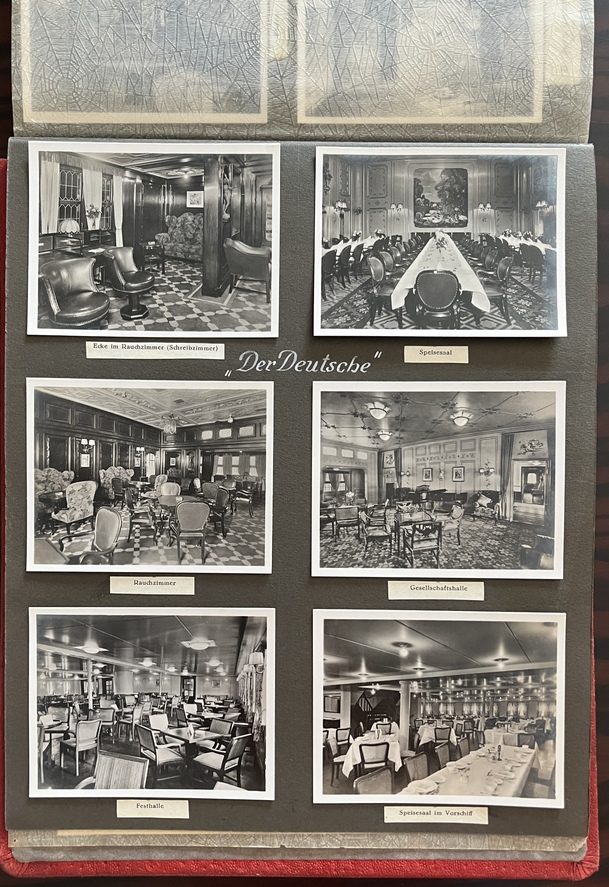
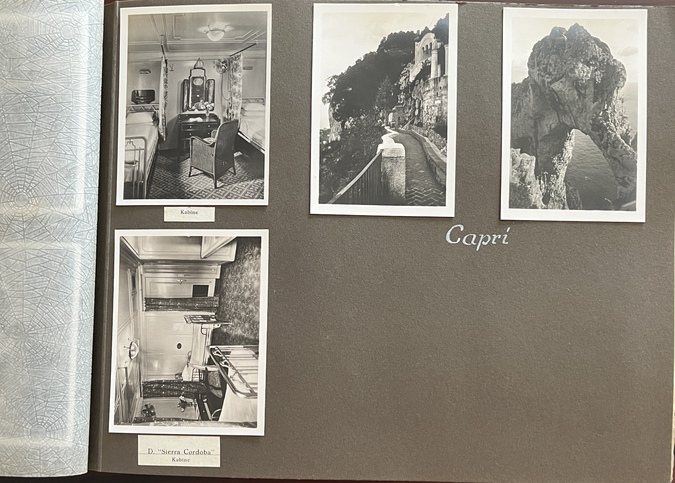
The principal interest of this album is its maritime and cruise content, particularly the German passenger liners ** Der Deutsche and Sierra Cordoba **, together with extensive photographic coverage of their interiors and the destinations visited during contemporary European cruises.
The album contains approximately 243 original period photographs, comprising one large-format frontispiece photograph and approximately 242 smaller photographs, making it considerably more extensive than the typical personal travel album of the period.
The ships
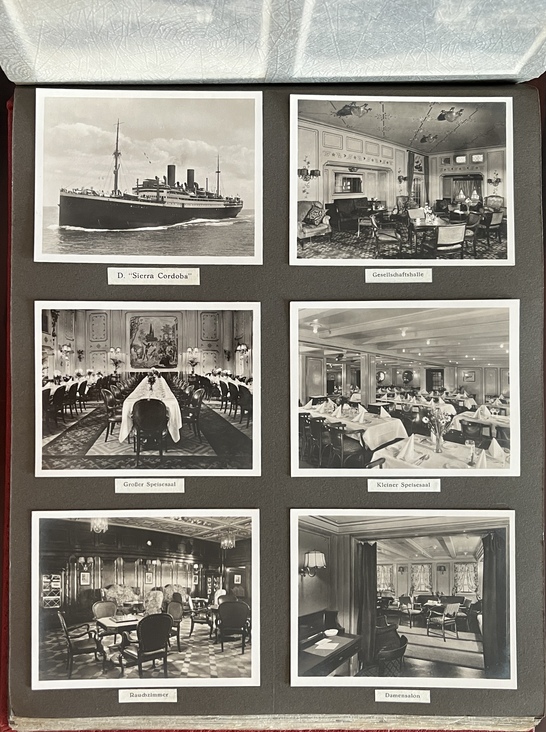
A major section of the album is devoted to the passenger liners ** Der Deutsche and Sierra Cordoba **.
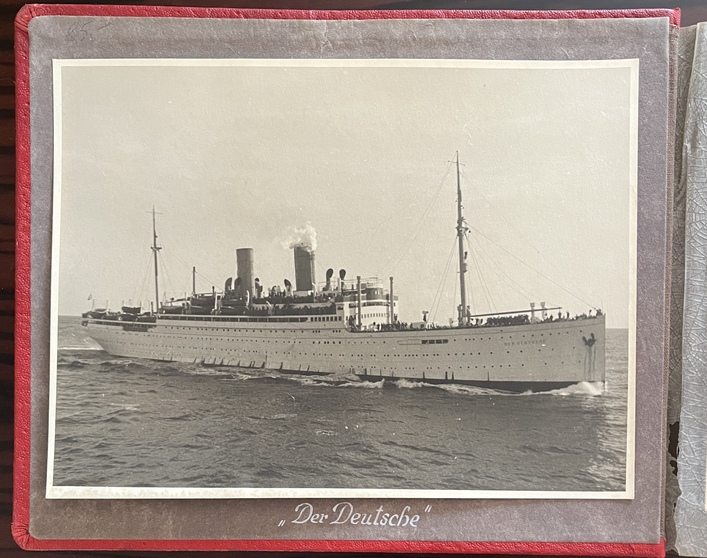
Der Deutsche was formerly the Norddeutscher Lloyd liner ** Sierra Morena **, built in 1924. It entered the Kraft durch Freude cruise service in the mid-1930s and was operated as a cruise ship for approximately 1,000 passengers. Its sister ship Sierra Cordoba likewise became part of the same fleet.
The album provides an unusually detailed visual record of these vessels, including:
Grand Dining Hall (Großer Speisesaal)
Smaller/Select Dining Room
Writing and Smoking Rooms
Women’s Salon
Social Hall
Passenger cabins
Corridors and interior spaces
Exterior and architectural views of the ships
Cruise and passenger-life scenes
For collectors of ocean liners and maritime history, these interior photographs are particularly interesting because they provide a contemporary visual record of the appearance and furnishing of the ships before the Second World War.
Cruise destinations
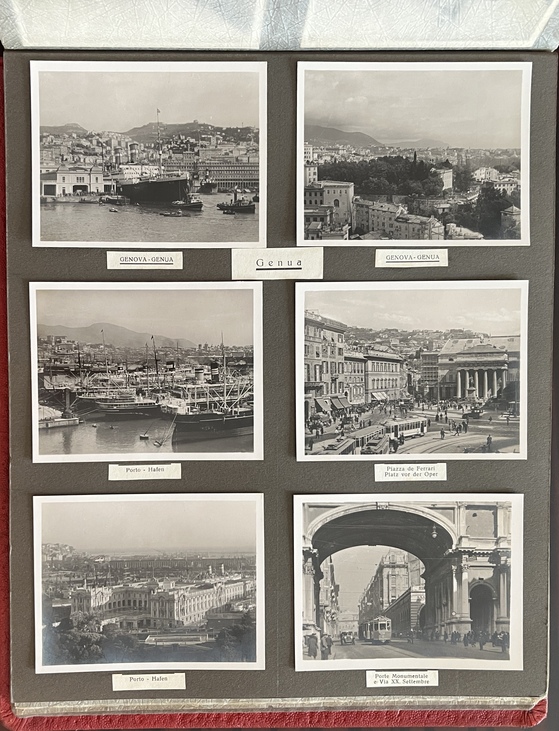
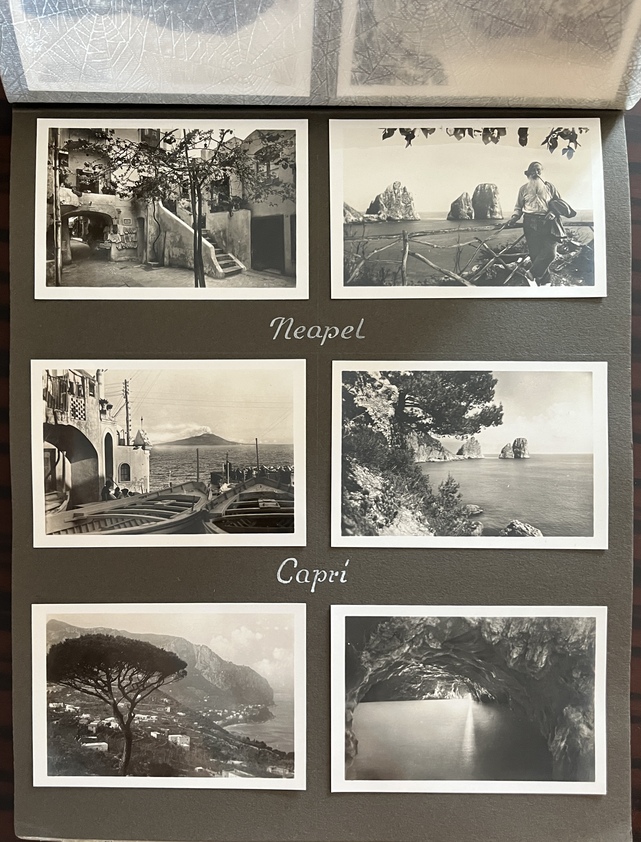
The album also follows the journeys through a remarkable selection of European destinations.
Italy and the Mediterranean include:
Genoa harbour
Piazza de Ferrari
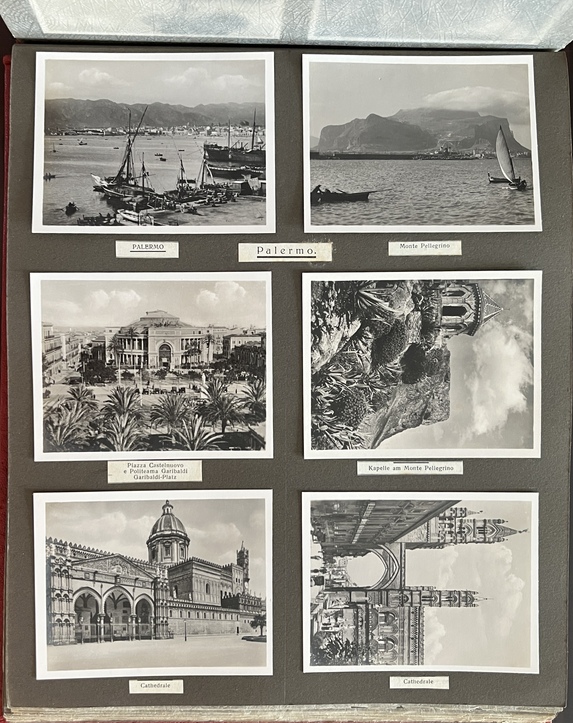
Palermo
Monte Pellegrino
Palermo Cathedral
Naples
Capri
Faraglioni
Blue Grotto / Grotta Azzurra
The Norwegian section includes:
Bergen
Norwegian fjords
Sognefjord
Balholm
Coastal landscapes and settlements
The combination of shipboard photography and destination photography gives the album the character of a 1930s illustrated cruise record, documenting both the vessels and the experience of travelling aboard them.
German architectural and infrastructure photography
Beyond the maritime material, the album contains substantial photographic documentation of Germany in the 1930s.
Particularly noteworthy are photographs of:
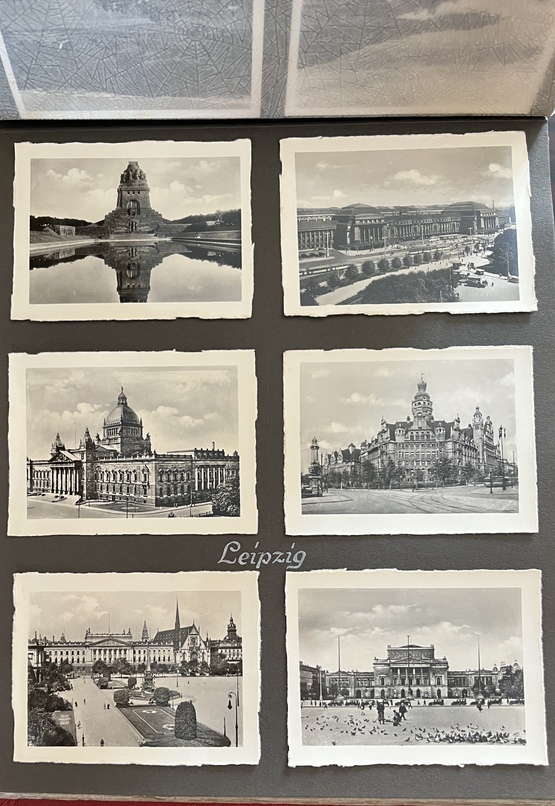
Leipzig Central Station
Neues Rathaus, Leipzig
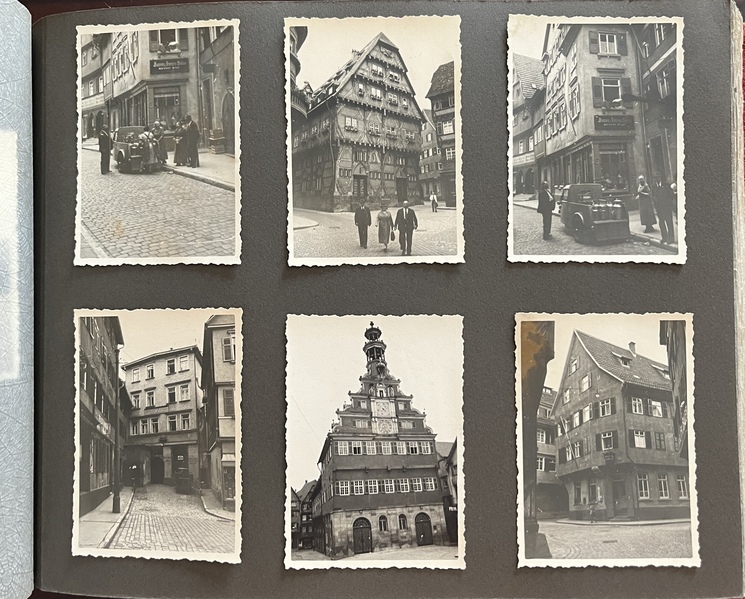
Historic German townscapes
Traditional half-timbered (Fachwerk) buildings
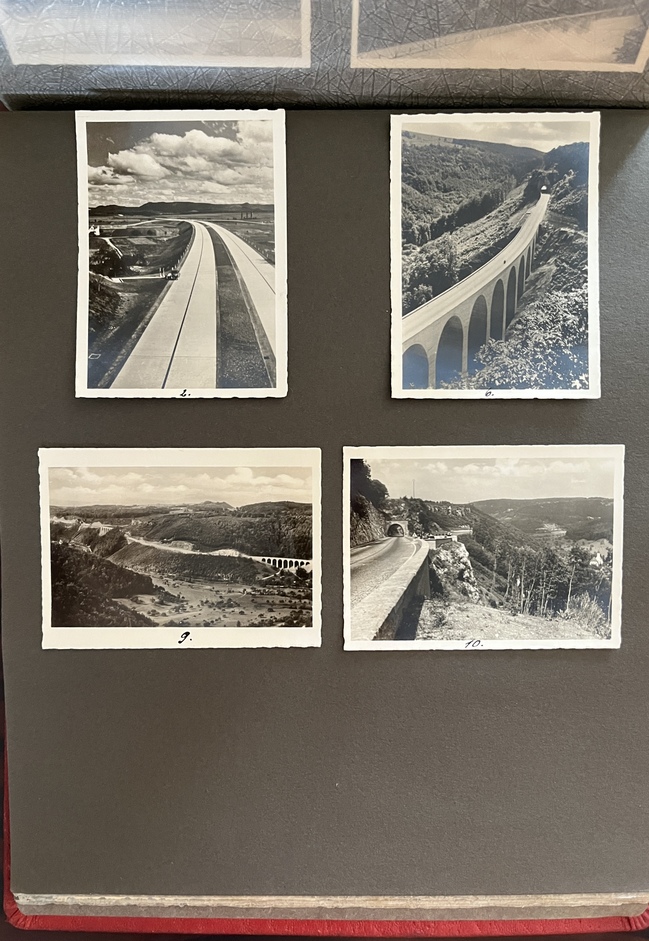
Early Reichsautobahn construction
Bridges, tunnels and major road engineering
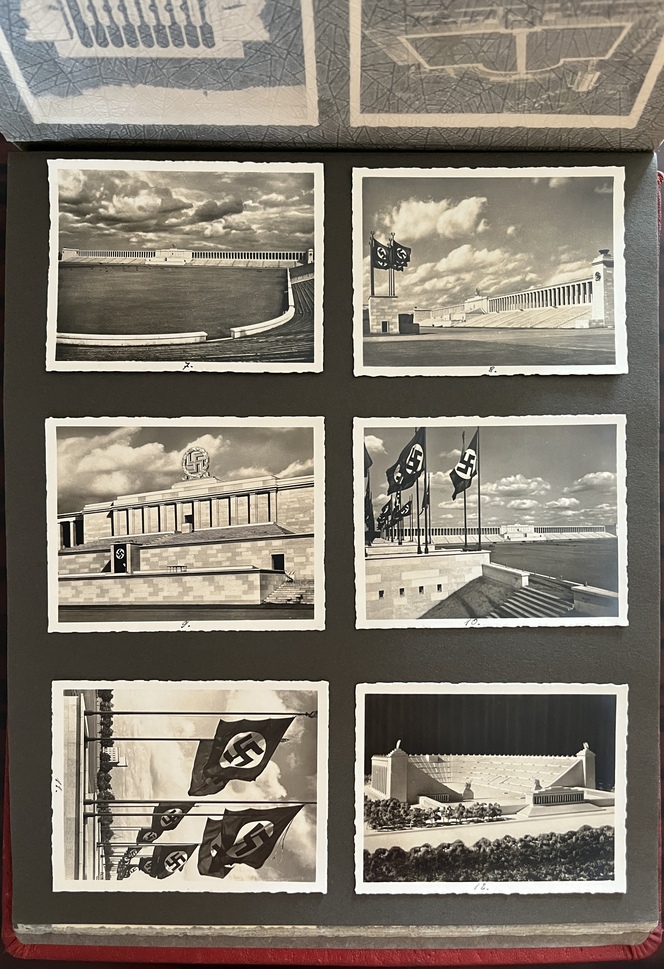
Nuremberg’s monumental architectural complex and models
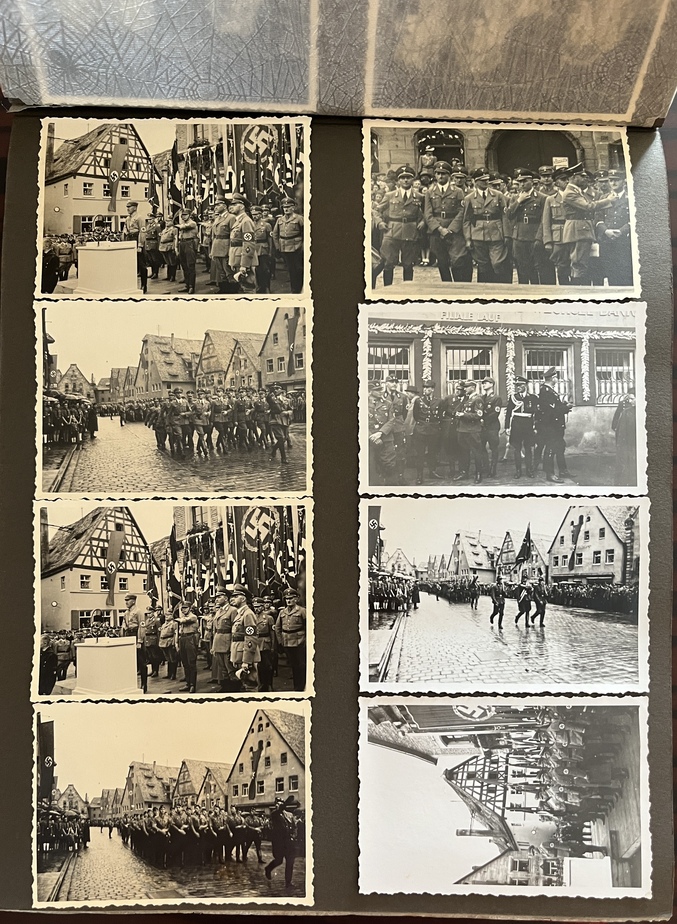
There are also several photographs showing contemporary political events and official symbolism, including party flags and formations. These images are retained here as original historical photographic material and as part of the album’s period context.
In addition to the extensive maritime and travel photography, the album contains a particularly interesting sequence of original contemporary photographs documenting a public procession in a German town during the 1930s.
Several photographs appear to form a continuous sequence, with three or four successive exposures taken from essentially the same viewpoint as the uniformed procession moved along the town’s central paved street. The sequence captures the movement of the participants and surrounding spectators rather than presenting a single static commemorative image.
This material is especially noteworthy because, unlike many of the architectural and tourist views in the album which appear to be commercially produced photographic prints, these images have the character of private contemporary photographs made at the event itself.
As a result, they provide an unusually direct visual record of a specific local public gathering, including the participants, spectators, streetscape and surrounding buildings. Such privately made sequences can be of considerable interest to collectors and researchers because they document everyday local historical events from the perspective of an individual photographer, rather than through an official or commercially circulated souvenir image.
Photographic characteristics
The photographs are original 1930s silver-gelatin photographic prints, many retaining their characteristic irregular/deckle edges.
The smaller photographs measure approximately:
9 × 7 cm
They are arranged systematically, generally in grids of approximately six photographs per page, on dark grey album mounts.
The pages are separated by original spiderweb-patterned glassine tissue interleaves, another characteristic feature of period photographic albums.
The large opening photograph measures approximately:
24 × 28 cm
and bears the printed identification “Der Deutsche”.
The photograph is attributed to H. Kohl of Wesermünde-Lehe, a photographer associated with maritime photography in the Bremerhaven area.
Physical condition
The album measures approximately:
30 × 23 cm
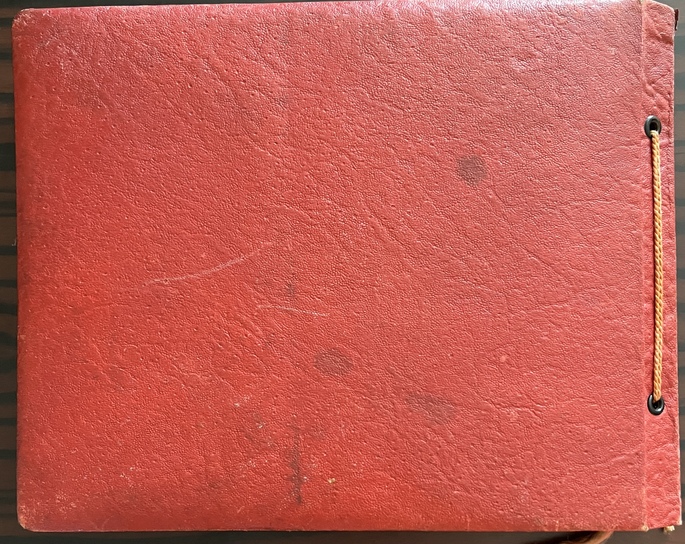
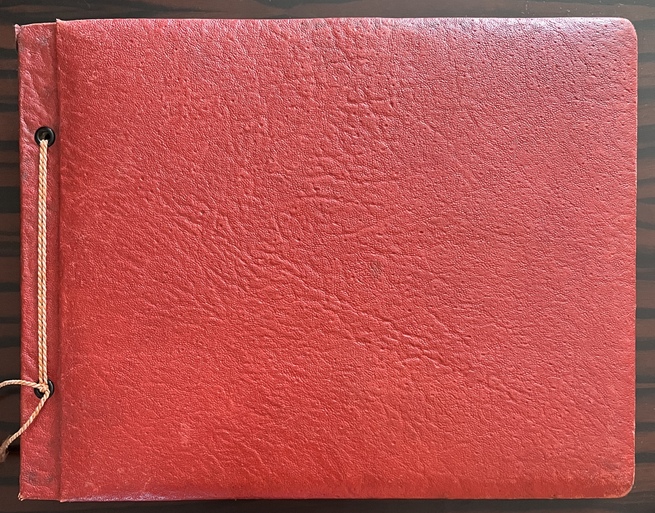
The binding is a substantial red faux-leather textured hardback, with cord-laced metal eyelets along the spine/left margin.
The album remains substantially complete, containing approximately 243 photographs.
The photographs generally show the expected signs of age, including minor surface marks, handling wear and occasional fading. The album binding and glassine interleaves also show age-related wear.
Please study all photographs carefully for the exact condition of the album, pages and individual prints.
Historical significance
This is an unusually comprehensive photographic record of German passenger-ship cruising and European tourism during the second half of the 1930s.
Its greatest appeal lies in the extensive contemporary visual documentation of the vessels ** Der Deutsche and Sierra Cordoba **, their interiors, passengers’ spaces and the destinations visited.
The album also provides valuable secondary documentation of German architecture, infrastructure and public life immediately before the Second World War.