
140.00€
A rare original Greek regional publication documenting the Nomos of Larissa and the wider Thessaly region, produced on the eve of the Second World War.
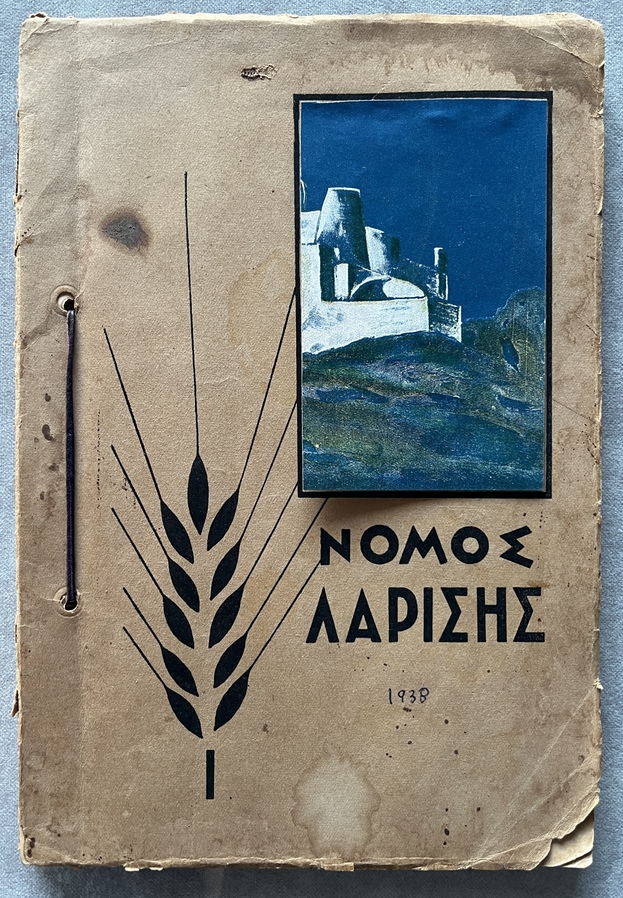
Entitled «ΝΟΜΟΣ ΛΑΡΙΣΗΣ» (Nomos Larissis / Prefecture of Larissa), this scarce illustrated album provides a fascinating contemporary record of Larissa and Thessaly during the late 1930s, combining regional history, geography, photography and economic information with distinctive period graphic design.
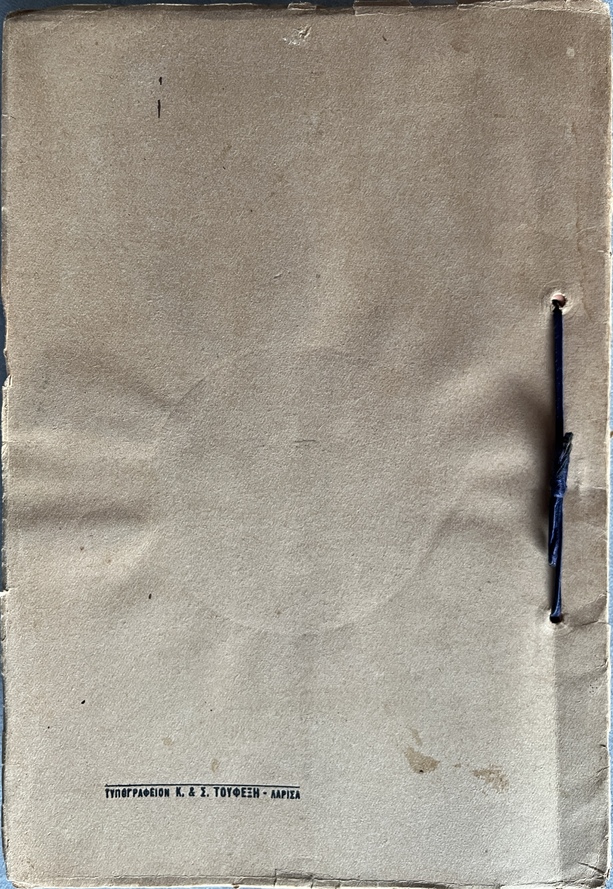
Printed locally in Larissa by Typografeion K. & S. Toufexis, the publication dates to approximately 1939–1940, during the 4th of August regime of Ioannis Metaxas. It is an interesting example of Greek provincial publishing from this period and reflects the official and economic presentation of the region immediately before the Second World War.
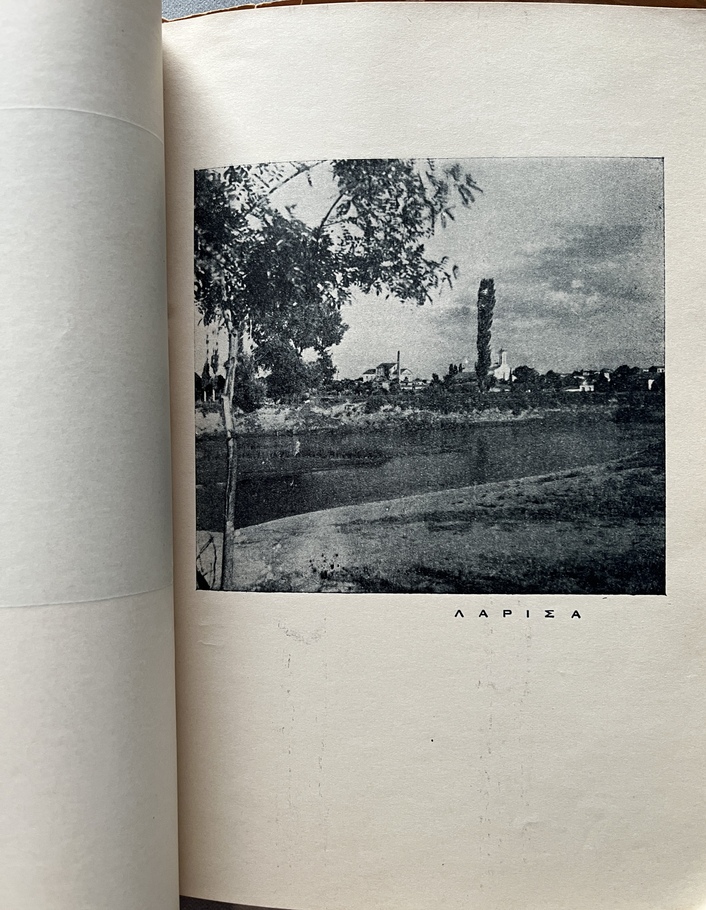
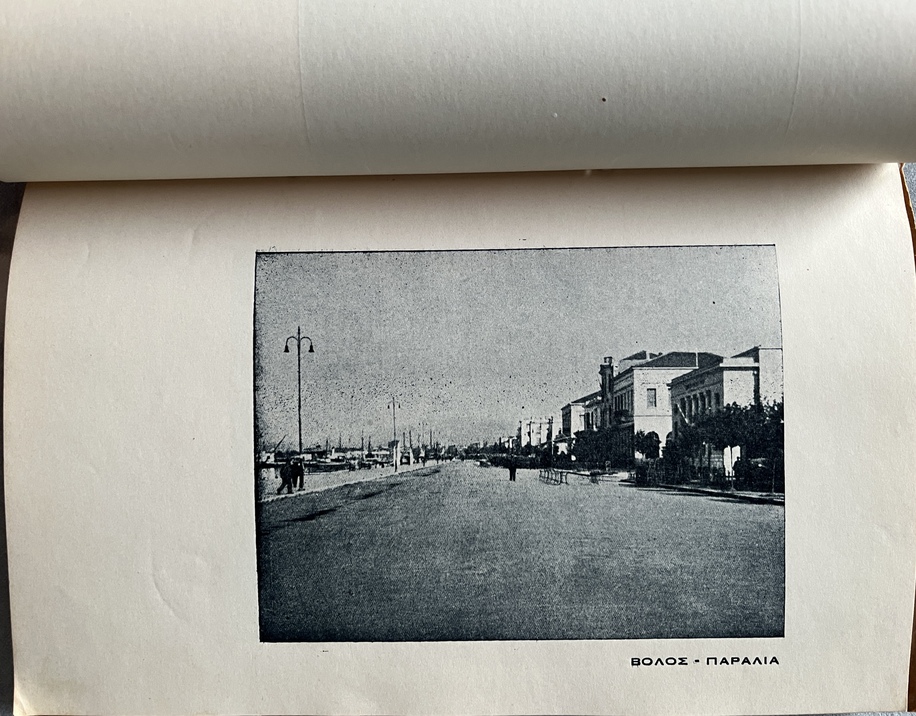
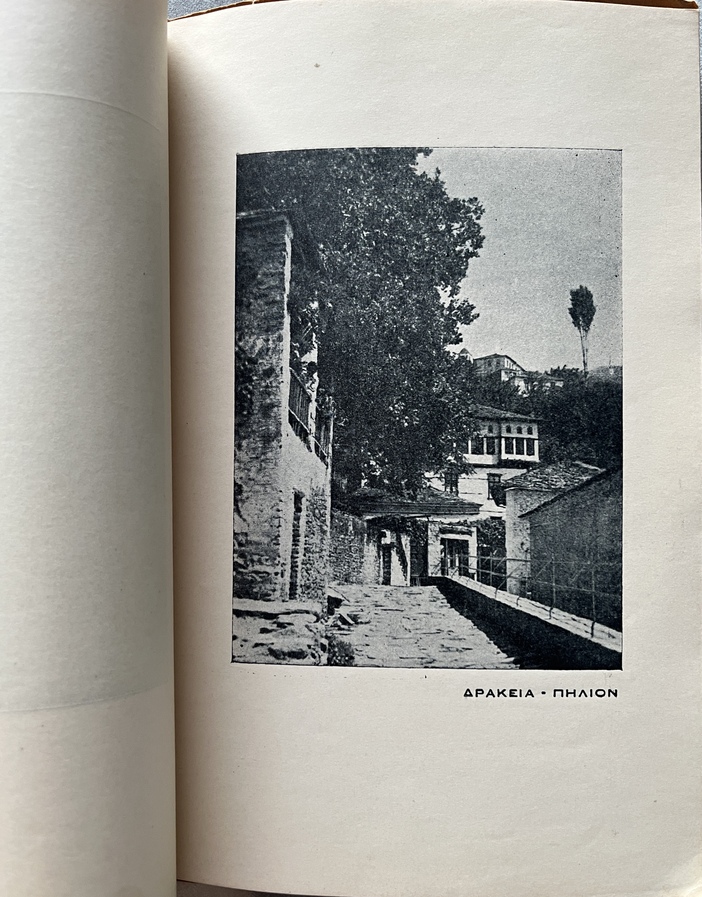
The principal subject is the Nomos of Larissa, while the album also presents the broader Thessalian landscape, with references to places including Larissa, Volos, Pelion, Agia, Farsala, Tyrnavos and Tempi.
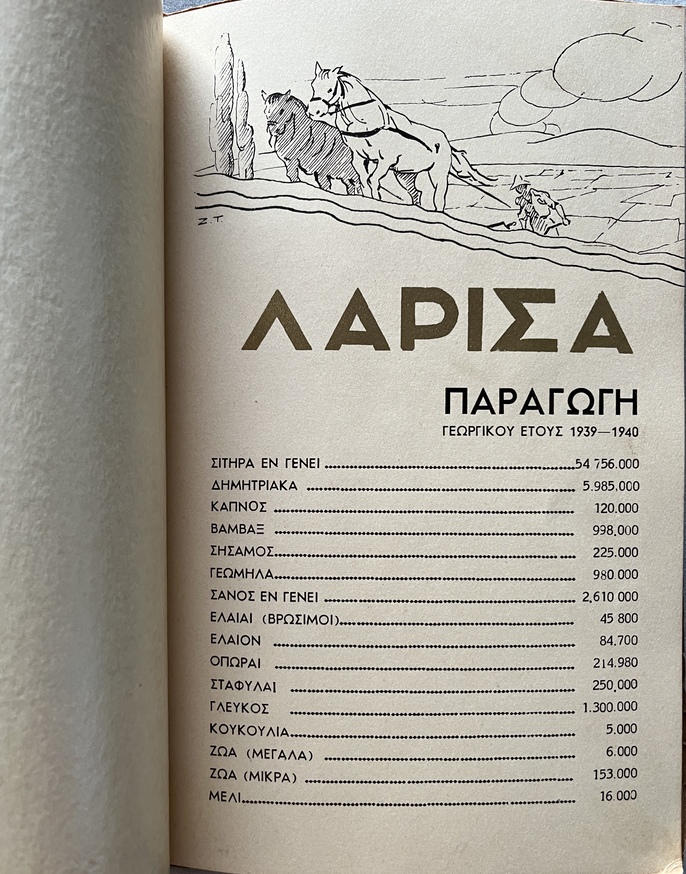
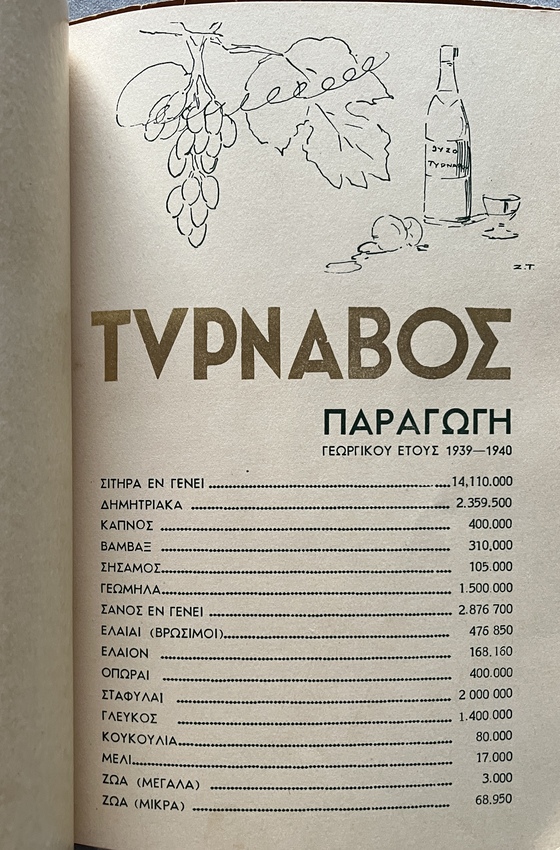
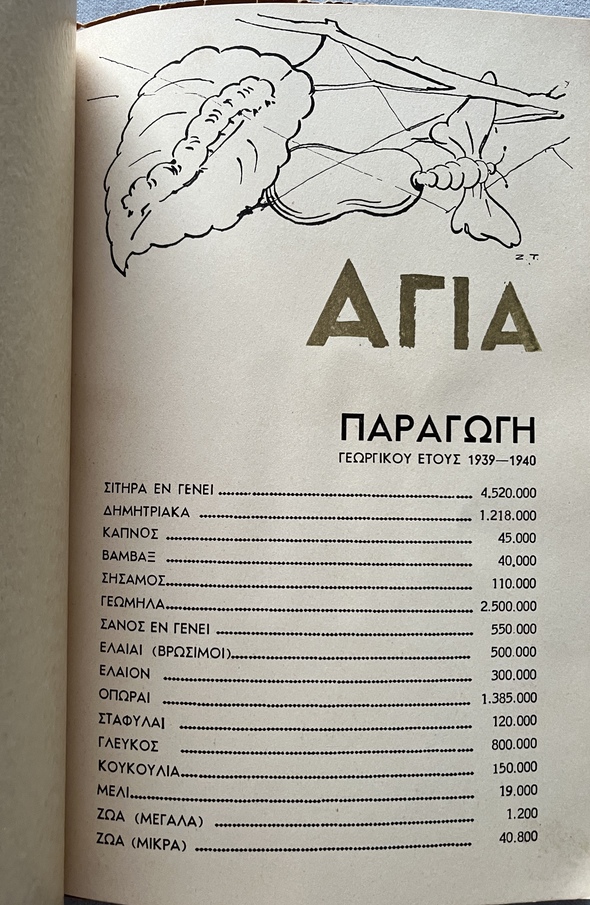
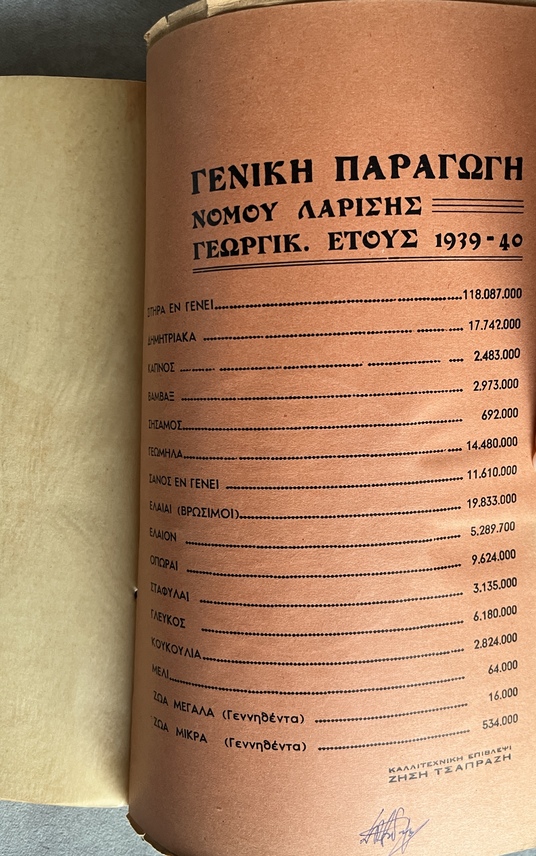
The publication contains historical and geographical texts, photographic views of towns and monuments, and detailed agricultural and economic information. Production figures for commodities including wheat, cotton, sesame, olives, grapes and wine provide a valuable contemporary snapshot of the region’s agricultural economy around 1939–1940.
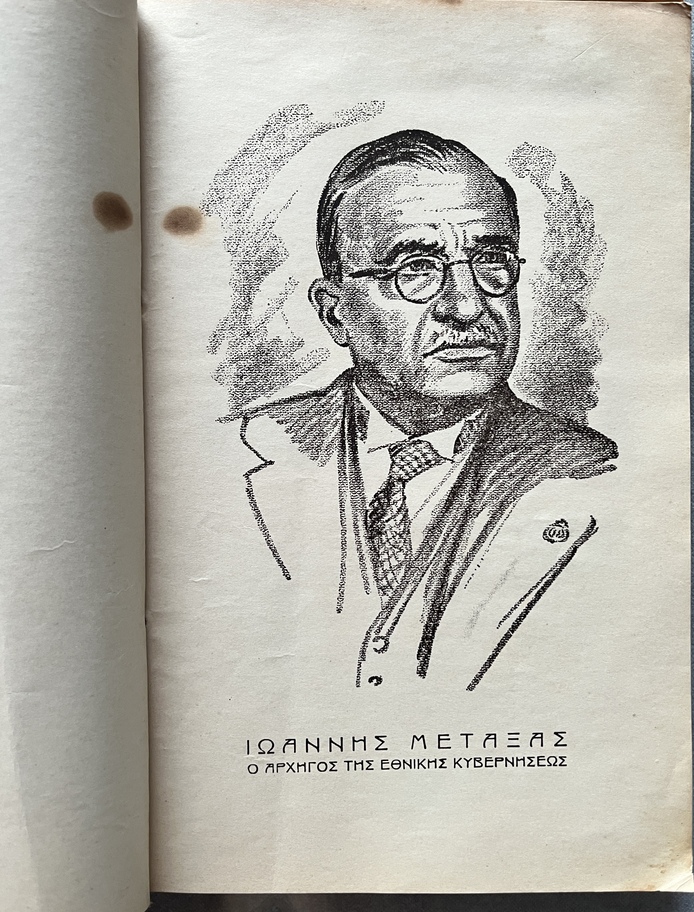
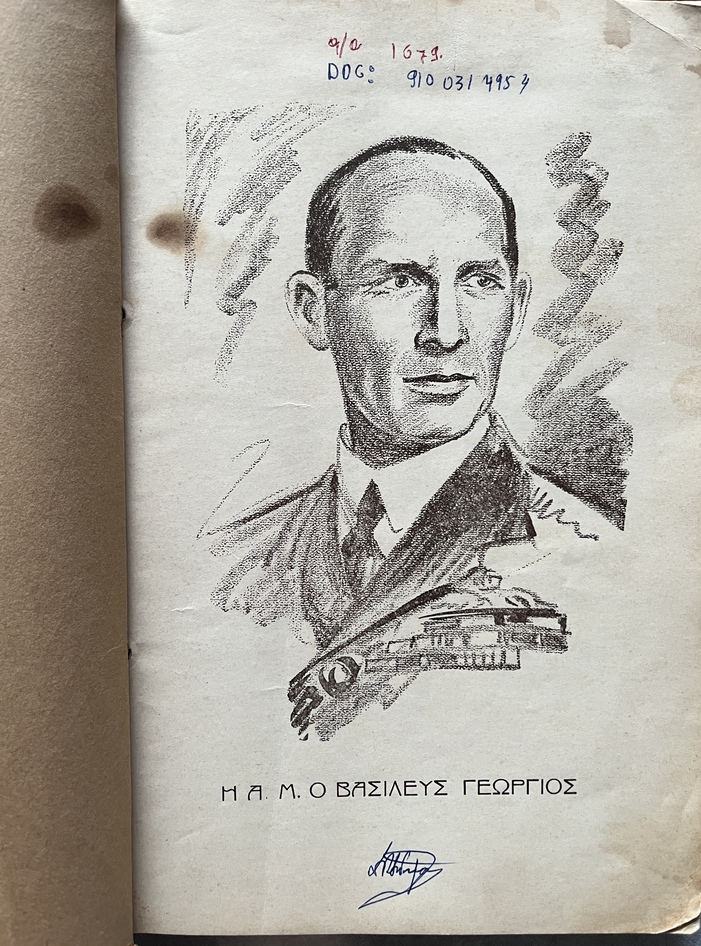
Of particular historical interest are the contemporary portraits of King George II of Greece and Ioannis Metaxas, reflecting the official character of Greek publications produced during the 4th of August period.
These images, together with the regional statistics and presentation of Thessaly’s economic resources, give the album an important documentary character beyond its visual appeal.
The graphic presentation is one of the publication’s most striking features.
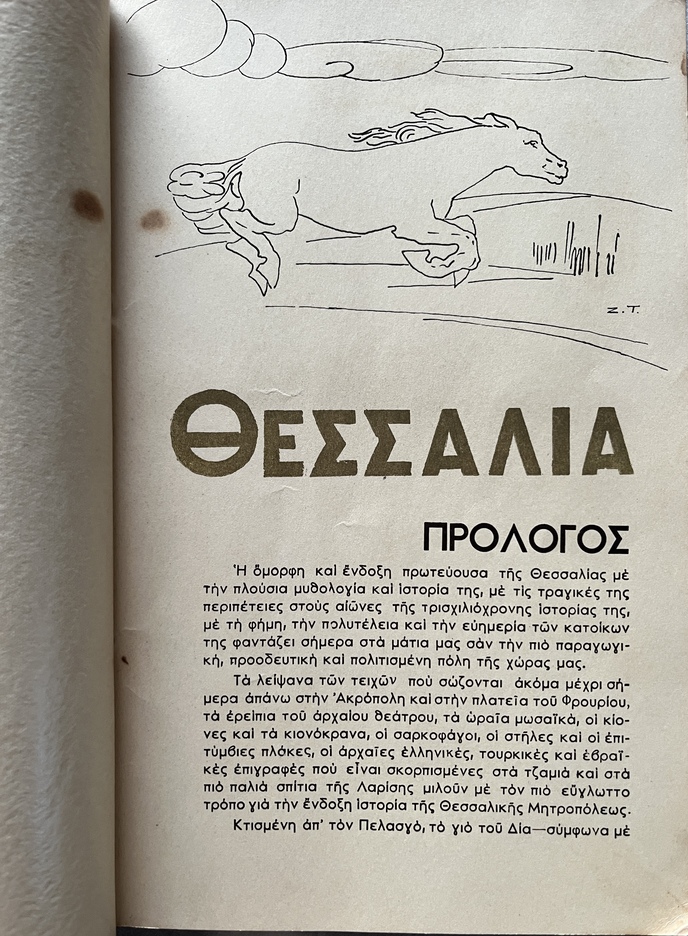
Major headings and sections, including «ΤΥΡΝΑΒΟΣ» and «ΘΕΣΣΑΛΙΑ», feature attractive metallic-gold hot-foil typography, complemented by decorative illustrations, vignettes and photographic material.
The artwork is attributed to Zisis Tsaprazis (1911–1975), a Larissa-born artist who studied at the Athens School of Fine Arts during the late 1920s and early 1930s. He subsequently worked in Larissa as an artist, decorator and teacher and contributed illustrations to publications.
The combination of local history, economic documentation, original photography and distinctive interwar graphic design makes this an unusually interesting surviving example of Greek provincial publishing.
Title: ΝΟΜΟΣ ΛΑΡΙΣΗΣ
Subject: Nomos of Larissa / Thessaly
Language: Greek
Place of publication: Larissa, Greece
Printer: Typografeion K. & S. Toufexis
Date: circa 1939–1940
Dimensions: Approx. 16.5 cm × 14.5 cm
Extent: Unpaginated, approximately 40 pages
Illustrations: Photographs and original graphic artwork
Special features: Metallic-gold foil typography and decorative illustrations
Protective material: Original semi-transparent rice-paper sheets between major pages
Binding: Original illustrated card/paper binding
Good original vintage condition, with substantial age-related wear.
The original cover is present and retains its period character, but shows considerable wear consistent with its age and fragile paper construction, including surface soiling, staining, rubbing, edge wear, creasing and areas of paper loss at the corners and edges.
The binding and paper show additional signs of age and use, including marks and discoloration consistent with an approximately 85-year-old publication.
The interior remains an interesting and visually attractive survivor, with the original photographs, graphic elements and protective sheets present.
The item is offered in its original, unrestored condition.
Please consider the photographs an integral part of the condition description and examine them carefully for the exact state of the cover, binding, pages, photographs and inserts.
An evocative piece of pre-WWII Greek regional history and ephemera, particularly appealing to collectors interested in:
Larissa and Thessaly
Greek regional history
Interwar Greek publications
The 4th of August / Metaxas period
Greek economic and agricultural history
Greek graphic design and typography
Historical photography
Greek printed ephemera
The combination of local Larissa provenance, late-1930s economic statistics, period photography, official-era imagery and distinctive graphic design makes this a particularly interesting example of Greek provincial publishing immediately before the Second World War.