
170.00€
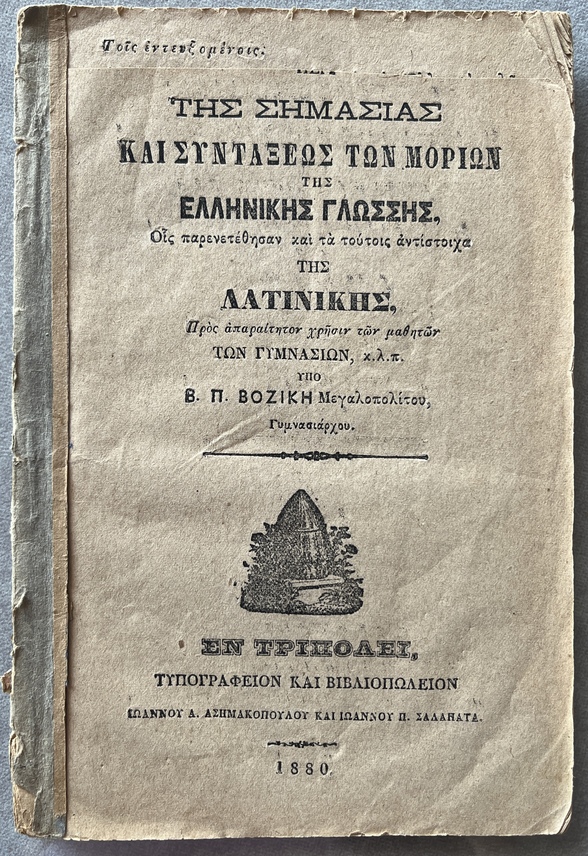
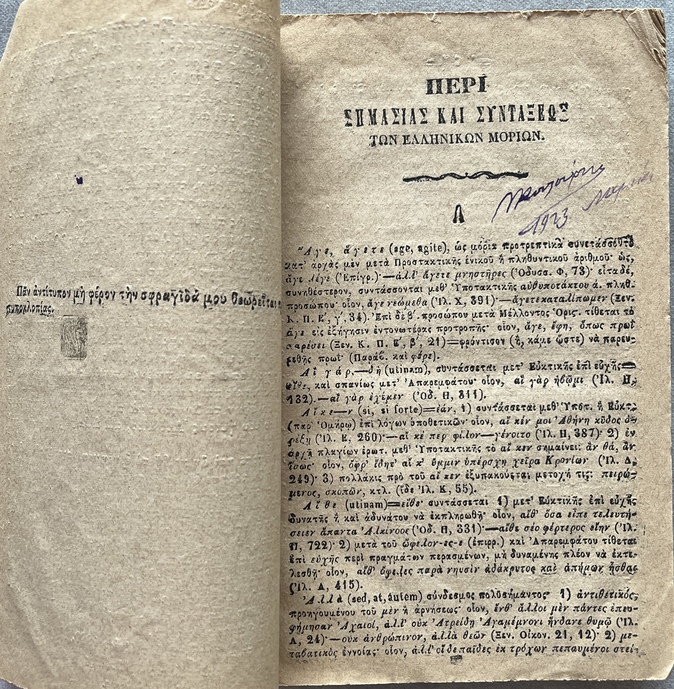
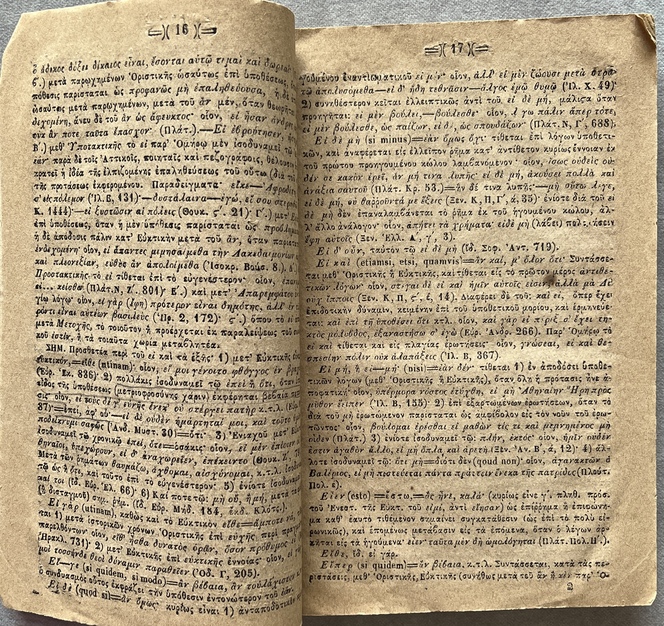
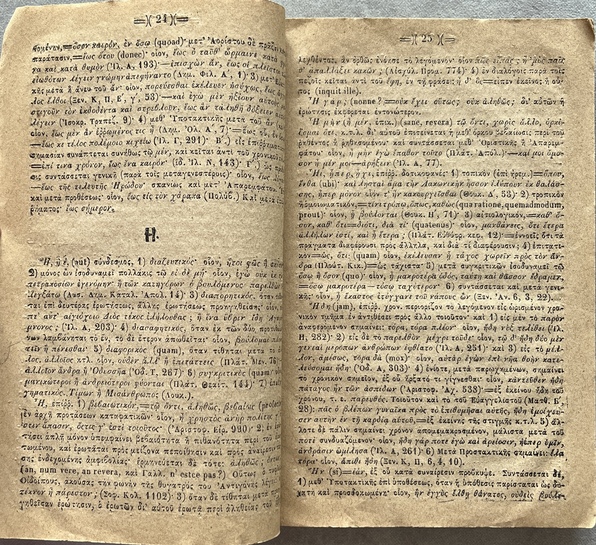
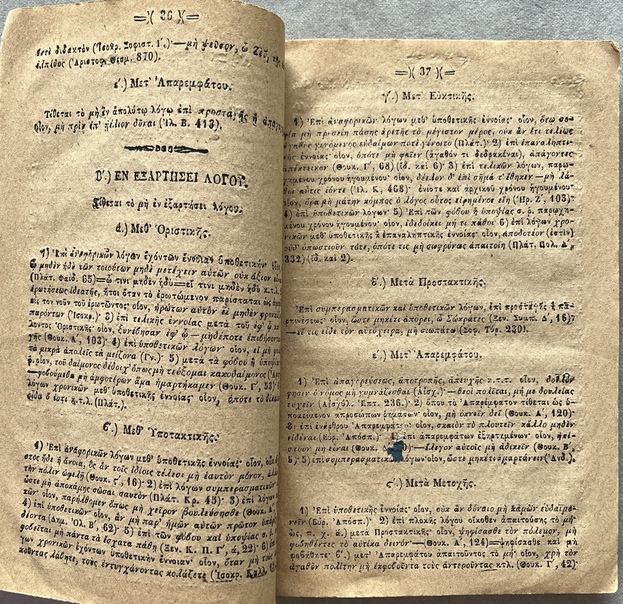
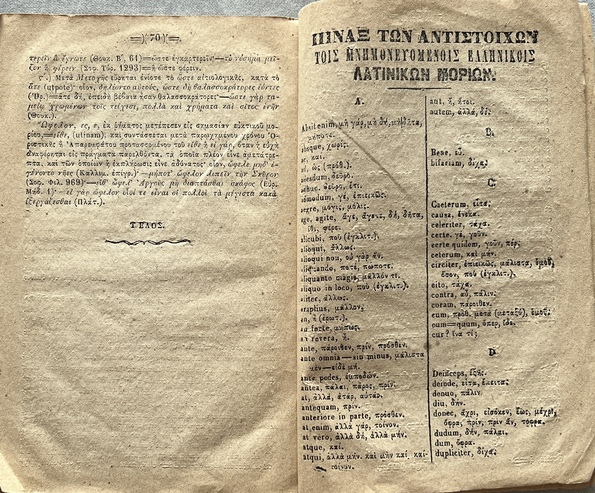
A scarce original 1880 Greek educational textbook, devoted to the meaning and syntax of particles in the Greek language, with corresponding Latin forms provided for comparison.
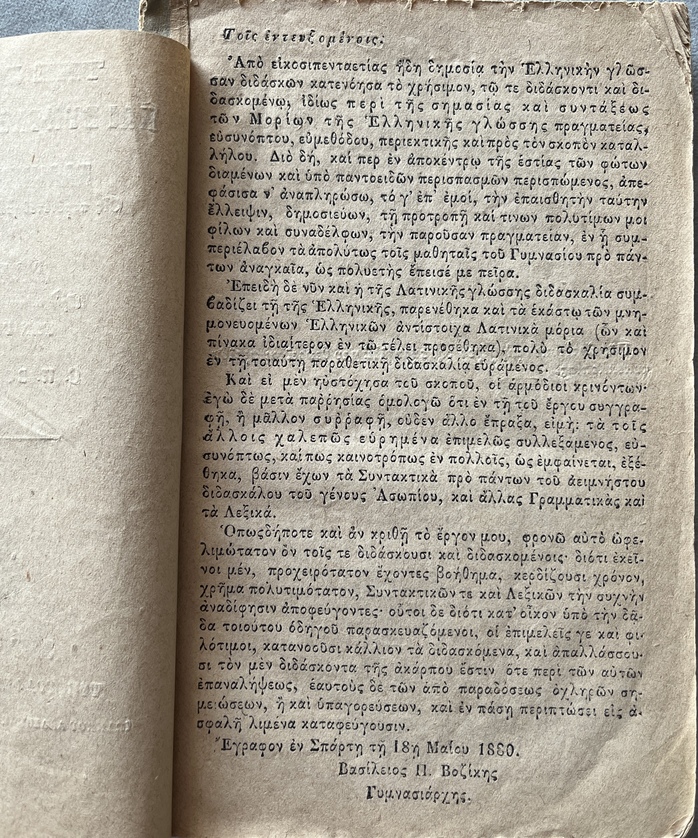
Written by Vasileios P. Vozikis (1823–), a Greek scholar, philologist and secondary-school headmaster, the work was intended for the educational needs of students of the Greek Gymnasia. It provides an interesting insight into the teaching of Classical Greek and Latin in the late 19th-century Greek educational system.
Of particular interest is the book’s Tripoli, Peloponnese imprint. Rather than being produced by one of the major publishing centres such as Athens, this volume was printed locally in Tripoli, giving it an additional significance for collectors interested in the history of Greek printing and regional education.
Vozikis, who was born in Chrysovitsi in Mantineia in 1823, studied at the School of Philosophy of the University of Athens, where he developed a strong knowledge of Ancient Greek literature as well as Latin and French. He began his teaching career in Lamia in 1855 and subsequently served as teacher and headmaster at schools in the Peloponnese, including Sparta. His teaching included the classical works of authors such as Thucydides and Demosthenes. In recognition of his contribution to Greek education, he received the Silver Cross of the Order of the Redeemer in 1878.
Bibliographical details
Author: V. P. Vozikis (Β. Π. Βοζίκης), Megalopolitis Gymnasiarch
Title: Της σημασίας και συντάξεως των μορίων της Ελληνικής γλώσσης, Οις παρενετέθησαν και τα τούτοις αντίστοιχα της Λατινικής (On the Meaning and Syntax of the Particles of the Greek Language—Including their Latin Equivalents—For the Essential Use of Gymnasium Students)
Place of publication: Tripoli, Greece
Printer: Ioannis A. Asimakopoulos and Ioannis P. Salapatas
Year: 1880
Extent: 75 pages
Dimensions: approximately 19.5 cm × 13 cm
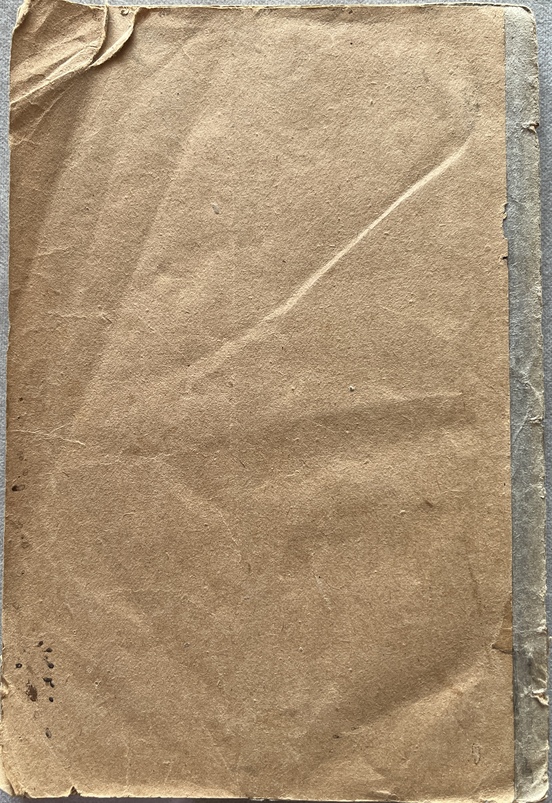
Binding: Original paper binding
Condition
Good antique condition.
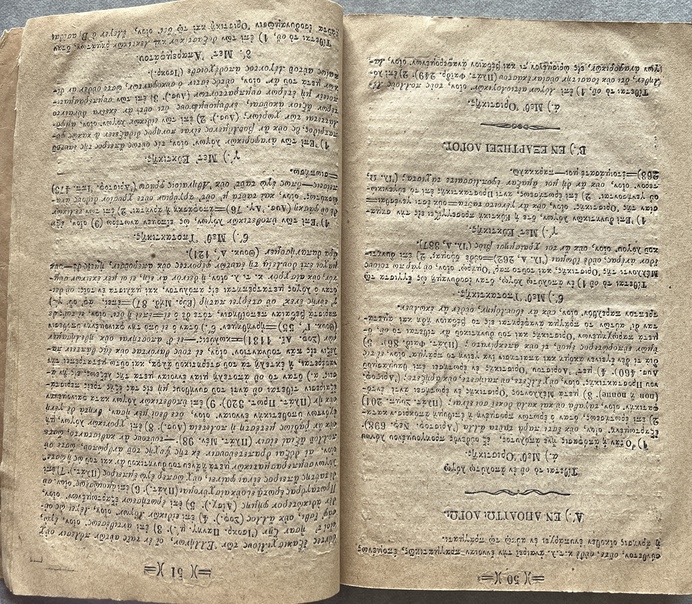
Please study all photographs carefully, as they form an integral part of the condition description and show the actual condition of the offered copy.
An appealing and increasingly difficult-to-find example of 19th-century Greek educational printing, combining classical Greek and Latin instruction with an unusual regional Tripoli imprint.