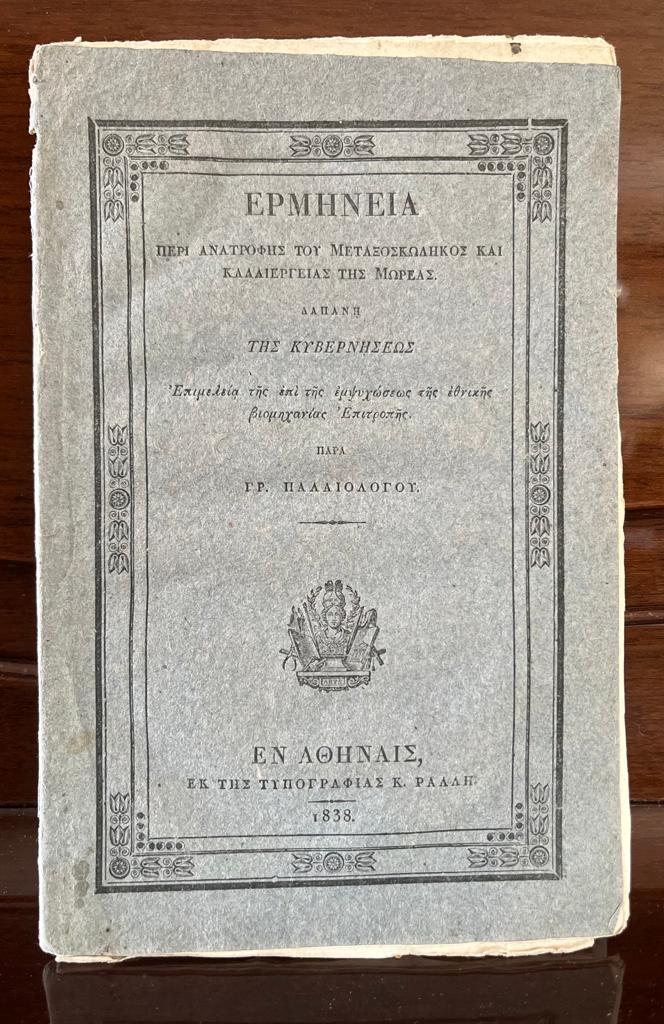
Ερμηνεία περί ανατροφής του μεταξοσκώληκος και καλλιέργειας της μωρέας
δαπάνη της κυβερνήσεως
Επιμελεία της επί της εμψυχώσεως της εθνικής βιομηχανίας Επιτροπής
παρά Γρ. Παλαιολόγου
Explanation on Rearing Silkworms and Cultivating Mulberry Trees
by Gr. Palaiologos
Committee on the Animation of the National Industry Commission
Published by E. Ralli in Athens in 1838
Original Paper Binding
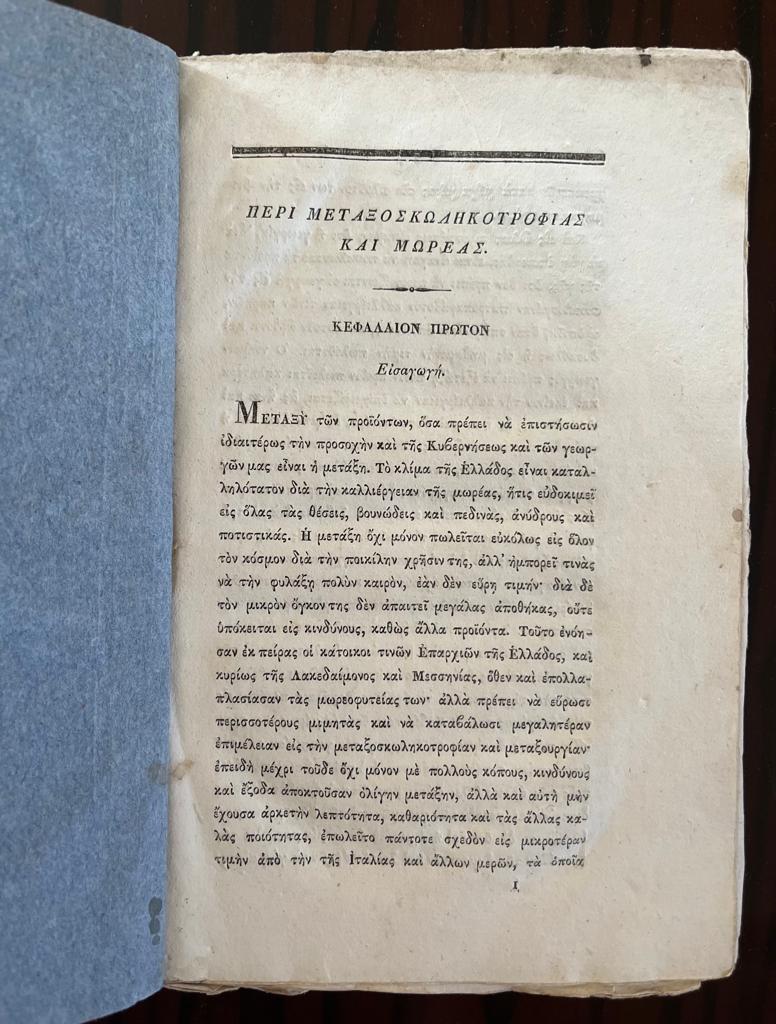
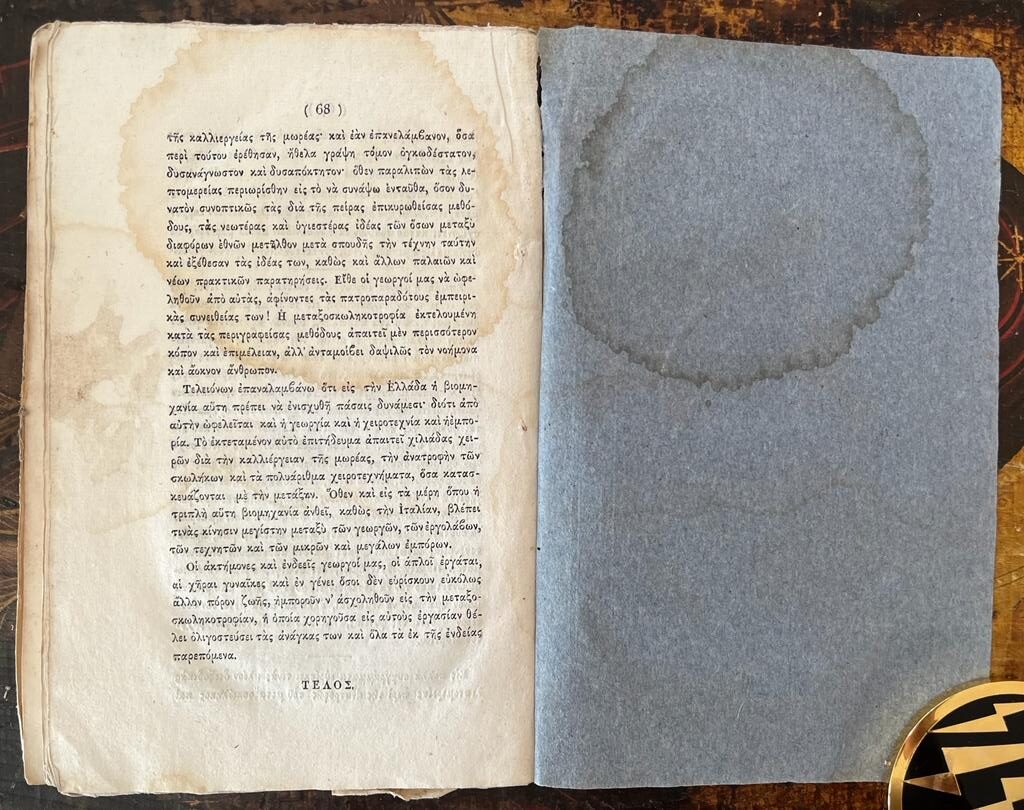
Pages 68
First Edition
21cm x 13,5cm
Sericulture, or silk farming, is the cultivation of silkworms to produce silk. Although there are several commercial species of silkworms, the caterpillar of the domestic silk moth is the most widely used and intensively studied silkworm.
Sericulture in Greece: At the dawn of the 19th century silk making was one of the most well known activities in the Greek area. Cultivation of the mulberry tree, cocoon farming and the first, rudimentary eco-technical processing (raw silk or simple forms of silk thread) were complementary activities of the rural household, with trade purpose. In this form the silk industry was confronted with the challenges of industrialization. It was also reorganized with new techniques that made their appearance reinforcing the process of the transformation of the Greek economy. This innovation attempted the transition from the domestic-traditional to the factory system production.